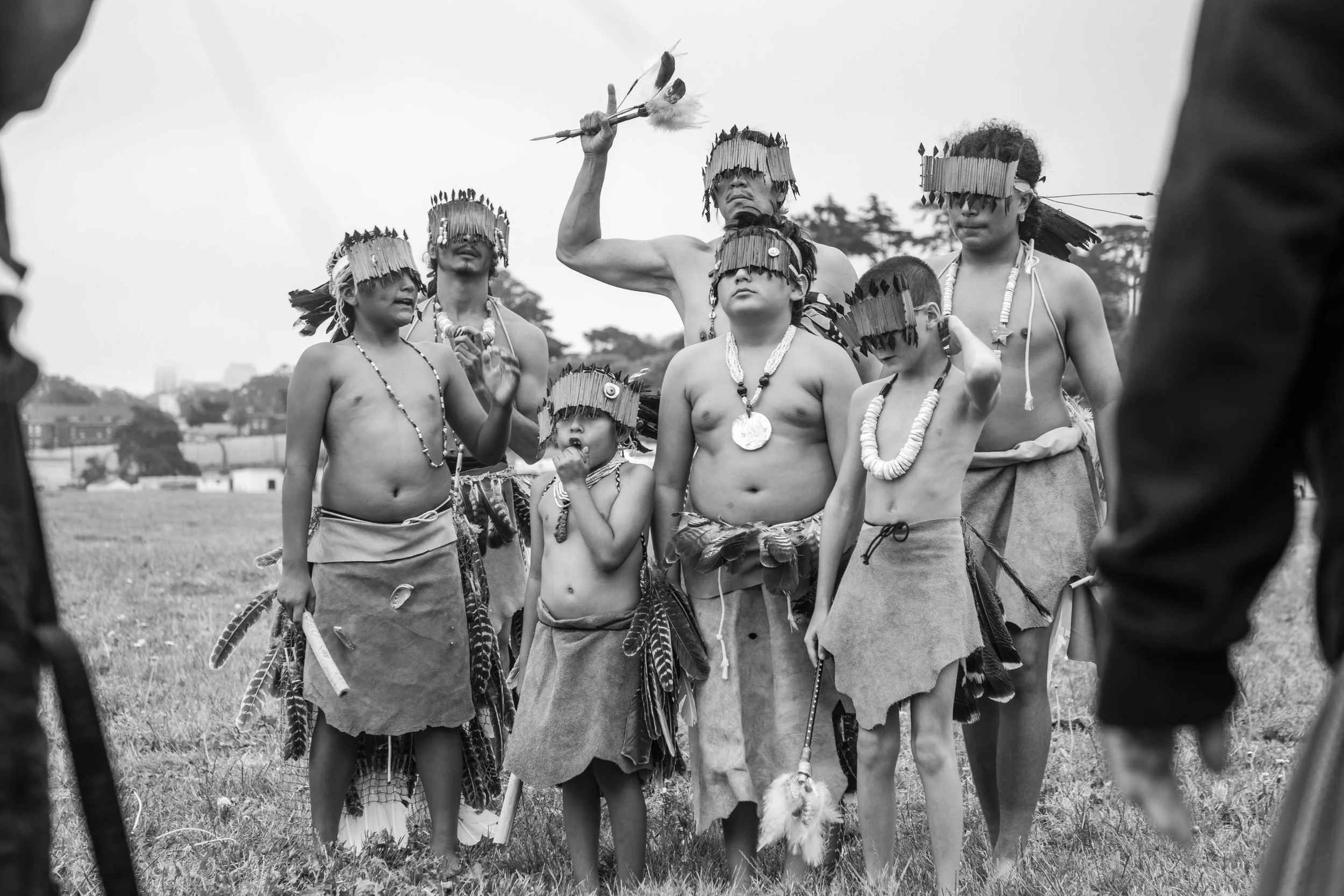
Muwekma Ohlone Tribe of the San Francisco Bay
Mákkin Mak Muwékma Wolwóolum, Akkoy Mak-Warep, Manne Mak Hiswi!
We are Muwekma Ohlone.
Welcome to our land, where we are born.
Still here. Still sovereign.
Who we are
The present-day Muwekma Ohlone Tribe is comprised of all of the known surviving American Indian lineages aboriginal to the San Francisco Bay region who trace their ancestry through the Missions Dolores, Santa Clara, and San Jose, and who were also members of the historic Federally Recognized Verona Band of Alameda County.
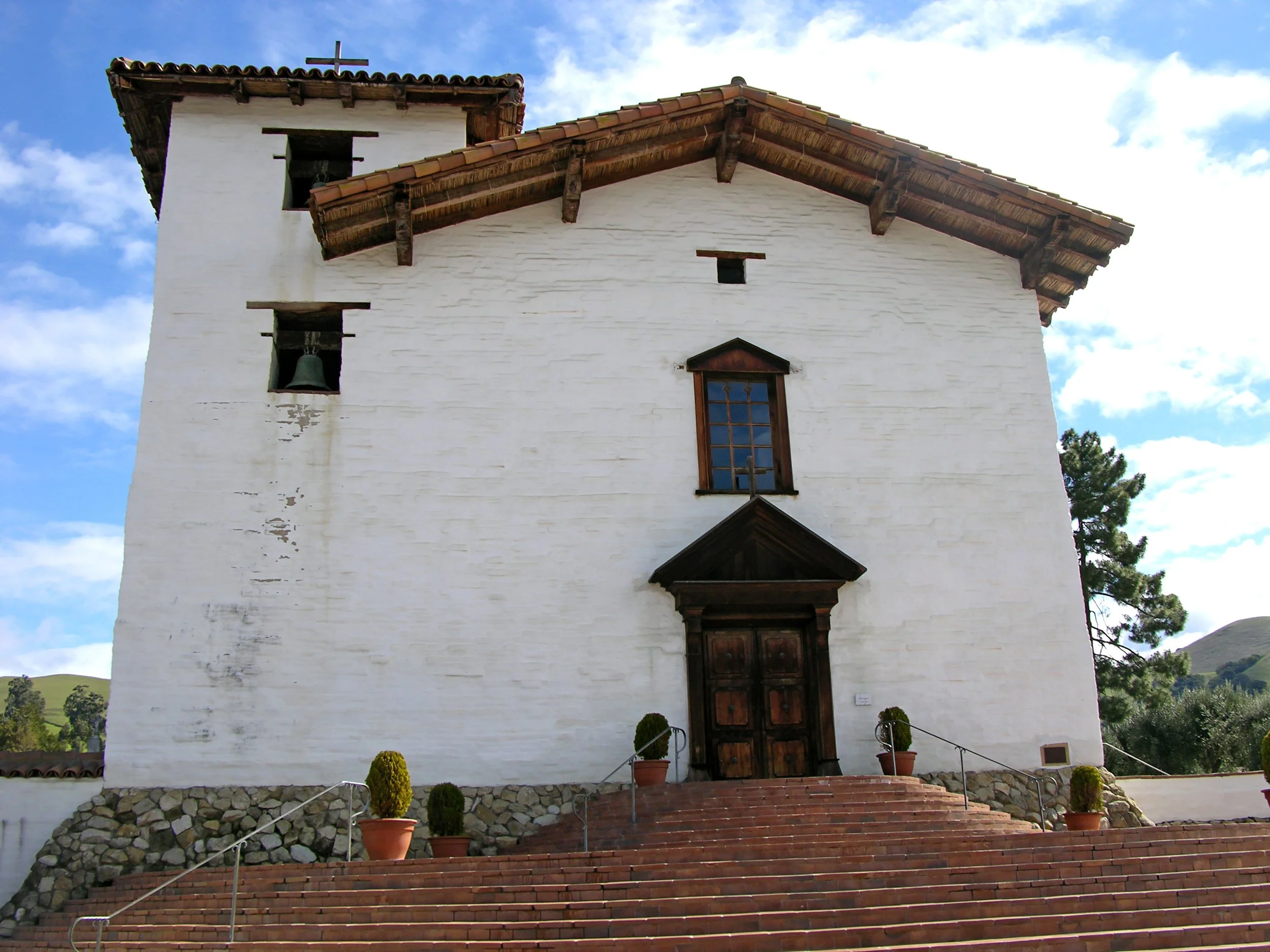
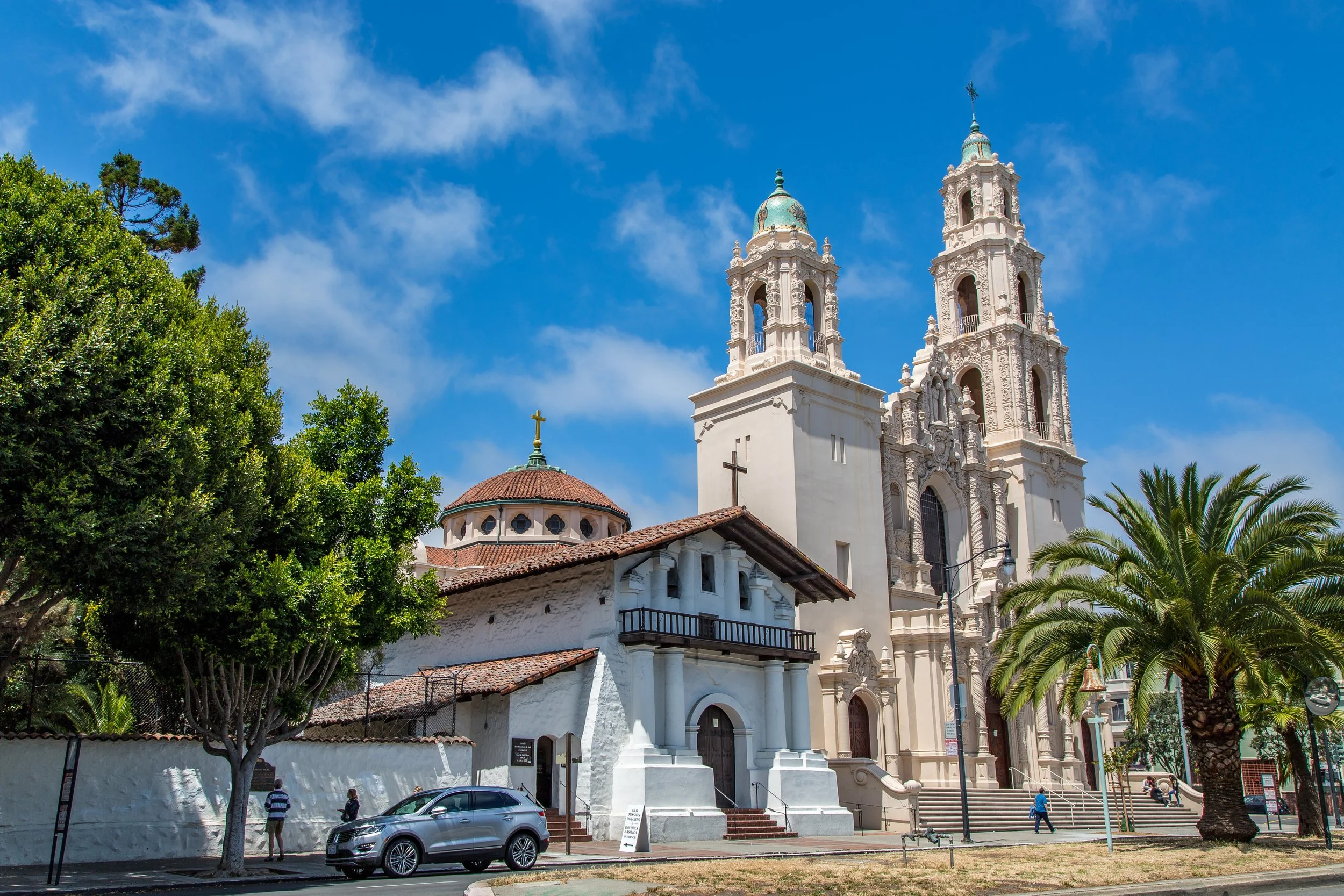
Our aboriginal homeland includes the following counties: San Francisco, San Mateo, most of Santa Clara, Alameda, Contra Costa, and portions of Napa, Santa Cruz, Solano, and San Joaquin. This large contiguous geographical area, which historically crosscuts aboriginal linguistic and tribal boundaries, fell under the sphere of influence of those three missions between 1776 and 1836.
The missionization policies deployed by the Catholic Church, and militarily supported by the Hispanic Empire, brought many distantly related — and in some cases already intermarried — tribal groups together at the missions.
Comprehensive genealogical analysis of the Mission Baptism, Death, and Marriage Records from the three Bay Area missions traces the surviving Muwekma lineages of the late nineteenth century through today back to their aboriginal villages.
The present-day tribally enrolled Muwekma lineages are represented by the Armija/Thompson, Santos-Piños-Juarez/Colos/Armija, Guzman/Nonessa, and Marine-Guzman-Peralta, Marine-Alvarez/Galvan, Marine-Sanchez, Marine-Munoz, Munoz-Guzman, Marine-Arellano, and Marine-Elston/Thompson/Ruano descended families.
“Muwekma” means “la Gente,” or “the People,” in Chocheño and Tamien — the Ohlone (or Costanoan) language spoken in the East and South San Francisco Bay regions. Verona Band Elders still employed this linguistic term in the late nineteenth and early twentieth centuries.”
Our ancestral tribal groups
Through mission records, the enrolled Muwekma lineages have been traced back to:
the Seunen and Alson Ohlone tribal groups of the southern East Bay, from the Fremont Plain to the Livermore Valley;
the Chupcan Bay Miwok–speaking tribal groups, and the Tamcan, Passasimi, and Yathikumne North Valley Yokut–speaking tribal groups of the interior valleys, including the Mt. Diablo, Byron, San Joaquin Delta, and Stockton regions;
the Jalquin Ohlone (Chocheño) speaking tribal group of the San Leandro, San Lorenzo, Hayward, and Oakland region of the East Bay;
the Salcan Bay Miwok–speaking tribal group from the area east of Oakland, including the inland valleys around Lafayette and Walnut Creek; and
the Napian/Karquin Ohlone tribal group of the Carquinez Straits of the North Bay.
The Jalquin tribal group was a neighboring tribe who lived to the north of the Seunens. Families from both of these tribes were collectively baptized at Mission Dolores in San Francisco, while most of the other tribal groups were principally baptized at Missions San Jose and Santa Clara.
The “Estero” area along the bayshore included the Alson Chocheño/Tamien-speaking (bilingual) tribal group located along the lower Guadalupe River and the Tuibun tribal group of the Fremont Plain. Both of these groups were first missionized at Mission Santa Clara and later went to Mission San Jose (Milliken 1983, 1991).
Highlight timeline
These dates are drawn only from the current site. The full evidence list remains on the Historical Timeline page.
1776–1836 — The aboriginal homeland falls under the sphere of influence of Missions Dolores, Santa Clara, and San Jose.
1797 — Mission San Jose is founded. Silvestre Avendano of the Alson (del Estero) Ohlone tribal group is among the first 300 Indians baptized there.
1840–1845 — Mexican governors grant land to Clareño Ohlone families, including Rancho La Purísima Concepción, Rancho Posolmi y Pozitas de las Ánimas, Rancho de los Coches, and Rancho Ulistac.
1846–1848 — The American conquest of California. At least six Muwekma rancheria communities take shape in the East Bay.
1905–1906 — Special Indian Agent C. E. Kelsey conducts a Special Indian Census and identifies the Verona Band of Alameda County.
1906–1927 — The Verona Band is federally acknowledged. The Tribe falls under the Indian Service Bureau in Washington, D.C., then, by 1914, the Reno Agency, and later the Sacramento Agency.
June 23, 1927 — Sacramento Superintendent Lafayette A. Dorrington administratively dismisses the Verona Band, without an on-site visit, due process, or communication with the Tribe or its leaders.
1928–1932 — Surviving Verona Band/Muwekma lineages enroll with the BIA under the 1928 California Indian Jurisdictional Act.
World War I and World War II — Muwekma men serve overseas even before California Indians legally become citizens in 1924; almost all Muwekma men serve in World War II. Service continues through Korea, Vietnam, Desert Storm, and Iraq.
1962–1971 — Under the leadership of Dolores Marine Alvarez / Piscopo / Galvan and her children, the Ohlone Indian Cemetery in Fremont is saved from destruction. Title transfers to the Ohlone Indian Tribe, Inc., in 1971.
1982–1984 — The Muwekma Ohlone Tribal Council is formally organized. Since 1984, descendants of the historic families have served on the Tribal and Elders Councils.
1989 — The Council passes a resolution to petition the United States for federal acknowledgment.
January 25, 1995 — The Tribe’s historical petition is submitted during a White House meeting of California Indian leaders.
May 24, 1996 — The BIA’s Branch of Acknowledgment and Research determines “previous unambiguous Federal Recognition” of the Pleasanton or Verona Band of Alameda County between 1914 and 1927.
June 30, 2000 — Federal District Judge Ricardo M. Urbina rules in favor of the Tribe and orders the Interior Department to expedite the petition.
September 6, 2002 — The Branch of Acknowledgment and Research issues a Final Determination. The Tribe continues to fight the decision in court.
September 21, 2006, and September 30, 2008 — Further victories in the U.S. District Court in Washington, D.C., including a remand on the Tribe’s similar situation to the Ione Band of Miwok and Lower Lake Rancheria.
August 4, 2024 — The Trail of Truth begins at Crissy Field in San Francisco: a 90-day horseback journey to Washington, D.C., led by Chairwoman Charlene Nijmeh and tribal kin.
Our families: lineages that carry this history
The Armija, Marshall, Thompson, and Santos–Piños lines
One of the direct ancestral lines of the Armija/Marshall/Thompson families, and part of the Santos/Piños/Juarez/Colos lineages, traces back to Silvestre Avendano of the Alson (del Estero) Ohlone tribal group. He was one of the first 300 Indians baptized at Mission San Jose after its founding in 1797.
Silvestre Avendano later married Perpetua Ssauechequi from the Tamcan tribal group, whose territory included the Byron area. Silvestre and Perpetua had a son named Jose Elias in October 1842. Jose Elias later married another ancestral Muwekma woman, Delfina Guerrera, sometime around 1866.
Another direct ancestor of the Armija/Marshall/Thompson lineage was Primo Vueslla, from the Seunen Ohlone–speaking tribal group, whose villages were originally established within the Dublin, San Ramon, Pleasanton, and Livermore Valley regions. Primo was born in 1794 and baptized at Mission San Jose on April 2, 1803, at the age of nine. He later married Remedia Lal-lapa, the daughter of Radegunda Toleppata of the Chupcan Tribe. The Chupcans’ original territory included the Concord and Mt. Diablo region. Remedia Lal-lapa was born in 1803 and baptized at Mission San Jose on February 27, 1811.
The descendants of Silvestre Avendano and his son Jose Elias Armija, as well as the descendants of Primo Vueslla and Remedia Lal-lapa through their granddaughters Delfina Guerrera Armija and Benedicta Gonzalez Piños, are enrolled in the Muwekma Ohlone Tribe. Delfina Guerrera Armija was the mother of Magdalena Armija Marshall Thompson. Benedicta Gonzalez Piños was the mother of Peregrina Piños Santos and Margarita Piños Juarez.
Peregrina Piños (b. 1883) married George Santos (b. 1876), whose grandparents had been one of the founding families of the Niles “El Molino” Rancheria. Their eldest and only surviving child was Erolinda Santos, who grew up in the household of her aunt Maggie Piños Juarez. By the time Erolinda was 15, she had met and later married the grandson of Maria de los Angeles (Angela) Colos.
Joseph Armijo / Garcia / Saunders
That grandson was known by several names. Originally baptized as Joseph Armijo, he was the son of Angela Colos’ daughter Francisca Luccha and Edward (Eduardo) Armija.
Six years before Eduardo Armija married his second wife, Chona Bautista, he had a child named Joseph Armijo with Francisca Luccha. Sometime prior to 1889–1890, Eduardo Armija had married Francisca Luccha by Indian custom, and their son Joseph was baptized at Mission San Jose in 1890.
Born on November 1, 1890, Joseph Armija’s name was changed to Joseph Garcia by the time he was eight years old, when he was temporarily placed in the St. Joseph’s Orphanage as a “half orphan” at Mission San Jose. On both the 1900 and 1910 Indian Town Population Censuses for Murray and Pleasanton Townships, Joseph Garcia was listed along with his grandmother Angela Colos.
By 1912, Joseph Garcia had married, by Indian custom, Mercedes Marine, who was also residing on the Alisal Rancheria in 1910. They had their only son, Joseph Thomas “Tommy” Garcia, in 1912.
Mercedes Marine died as a young woman at the age of 19, shortly afterwards, in 1914. By that time Joseph (Armijo) Garcia, for some unknown reason, went by the name Joseph Saunders (perhaps a variant of Santos). He married, by Indian custom, another Muwekma Ohlone woman, Erolinda Santos. Erolinda Santos and Joseph Saunders had their first child, Alfonso (Santos) Juarez, in 1914, baptized at St. Augustine’s Church, one mile from the Alisal Rancheria in Pleasanton. In 1915 they had a little girl who died within a few months. By 1917 they had their second son, Daniel (Saunders) Santos, also baptized at St. Augustine’s Church.
Years later, Alfonso Juarez, who had worked for Southern Pacific Railroad in Sunol, married Pauline Navarro. Their children are enrolled in the Tribe. Daniel Santos, after serving in the 41st Infantry Division in the Pacific Theater during World War II, never married. Both Alfonso and Daniel lived in Newark and worked at Leslie Salt Company.
Angela Colos, linguist of the Alisal Rancheria
Maria de los Angeles’ (Angela Colos’) ancestry has been traced through her own oral recollections and through Santa Clara and San Jose Mission records. Maria was the daughter of Zenon — a neophyte from Mission San Rafael who was probably of Napian/Karkin or Choquoime ancestry — and Joaquina Pico, whom Maria thought was a Tamaleño (Mt. Tamalpais). As a young woman Joaquina was raised by the Californio Pico family and later worked for the Bernals on their Santa Teresa Rancho in south San Jose.
Later Joaquina Pico settled in San Lorenzo, perhaps living on the San Lorenzo Rancheria. After the departure or death of her husband Zenon, a Koriak (Tribe) Russian man named Gregorio Colos lived with Joaquina, helped raise her children, and they took on his surname, Colos. Sometime around this period, when Joaquina was living at San Lorenzo, an Ohlone Indian named Santiago Piña became Angela Colos’ stepfather and taught her the Chocheño language.
According to Maria de los Angeles’ own account to John Peabody Harrington, she was born on the ranch of Don Agustín Bernal in Santa Teresa, south San Jose. Angela told Harrington that she learned to speak Chocheño from her stepfather, Santiago Piña, and his parents.
Based upon the work of Randy Milliken, Santiago’s lineage has been traced through the Mission San Jose baptismal records. Santiago’s parents were Bruno and Fermina. Bruno was born in 1796 and listed as an “Estc,” referring to the Taunan Ohlone Tribe of the Alameda Creek and Del Valle Creek drainages (Sunol/Pleasanton). Fermina was born in 1801 and was identified as a Luccha (Ohlone), which may explain why Angela’s daughter Francisca retained the same name, Luccha.
The Luccha Ohlone Tribe was located around the Del Mocho/Corral Hollow Creek drainages of Livermore. Santiago Piña was born July 11, 1819, and raised by the Californio Piña family. Angela’s mother Joaquina Pico was apparently raised by the Pico family living in San Jose and eventually moved to the Bernal Rancho in San Jose, where Angela was born.
Mission Santa Clara records indicate that Angela’s parents, Zenon and Joaquina, were married at the Mission in 1838. Joaquina was listed as a neophyte from Mission San Jose.
1838 October 16, #2711, Zenon & Joaquina:
“En 16 de 8bre be 1838 en la Yglecia de esta Mision…case y vele a los siguientes…A un Neofito (orginario de la Mision de S[an] Raf[ae]I y recidents en el Rancho de los Vernales) [Bernals] llamado Zenon con una Neofita de S[an] Jose llamada Joaquina.”
Maria de los Angeles was born between 1839 and 1840 and baptized at Mission San Jose in 1840.
By 1876, Maria de los Angeles Colos, then a widow, had married her next husband, Joseph Thomas Matcos.
1876 June 8, #281, Page 76, Volvono et Colos (Indigeni)
“A.D. 1876, die 8 Junil, Rev. J. Valentini mat jinxit Joseph Thomas Matthaeum natam annos circiter 40, ex Francisco Volvono et Maria Rufina, et Maria los Angeles Colos, Viduam Joannis, natam annos circita 35, ex Zenone et Maria Joaquina coram Petro Antonio et Johanna Maria.”
On the 1880 Federal Census for Murray Township, Alameda County (District 26), Angela Colos was identified as Sincion, Anchaline (Asuncion, Angeline), Indian, age 30. She was listed as a widow and living with her daughters Francisca (Luccha), Indian, age 14 (b. ca. 1866); Juana, Indian, age 11 (b. ca. 1869); Louisa, Indian, age 6; and Rita, Indian, age 2. Angela and her daughters were living eight houses away from Antonio Bernal, Jr., near Pleasanton.
Angela Colos and her grandson Joseph (Armijo) Garcia later appeared on the Indian Population Census of 1900 for Murray Township, Alameda County, as Uncela Carlans (Angela Colos). Joseph Garcia was identified as 9 years old and born November 1890. Angela and Joseph were living on the Alisal Rancheria next to Phoebe Inigo, along with her daughter Mary Guzman, Magdalena Armija Marshall, and her niece Carrie Calista Peralta. They were also living several casitas away from Joseph’s godmother, Benedicta Guerrera Piños.
Angela Colos continued to appear on the Pleasanton Alisal Rancheria with her grandson Joseph. They were listed on the 1905–1906 Special Indian Census conducted by California Indian Agent C. E. Kelsey. Kelsey identified them as “Angela Colos and grandson.” They were living next to Maria Trinidad Gonzales Reyes and Miguel Santos.
Angela Colos and Joseph Garcia later appeared on the 1910 Indian Population Census called “Indian Town” in Pleasanton Township, Alameda County. They were living next door to Captain Jose Antonio’s widow Jacoba, who was the Mayen (female Captain/Chief, or wife of the Captain/Chief) of the Tribe. Residing in Jacoba’s household were Catherine Peralta (Marine), Catherine’s husband Dario Marine, her daughter Beatrice Peralta (Marine), her sister-in-law Mercedes Marine, and Frank Guzman.
From 1902 to the 1920s, Angela Colos served as a Chocheño-speaking linguistic consultant to Alfred L. Kroeber (U.C. Berkeley), C. Hart Merriam, Charles E. Kelsey, James Alden Mason, and John Peabody Harrington (Bureau of American Ethnology). She provided rich linguistic and cultural information to Harrington, along with Jose Guzman and other members of the Verona Band/Muwekma Tribal community.
The Marine lineage
Another major Muwekma lineage includes the Marine families, descendants of Avelina Cornates and Raphael Marine. One of the direct ancestors of Avelina Cornates Marine was Liberato Culpeese (born 1787) of the Jalquin Ohlone and Saclan Bay Miwok–speaking tribal groups, whose territory was located in the East Bay, centering around South Oakland, San Leandro, Hayward, Castro Valley, Walnut Creek, Lafayette, Danville, and Concord, in Alameda and Contra Costa counties.
Liberato’s father was Faustino Poÿlemja, born ca. 1764 and baptized at Mission Dolores on December 18, 1794. He was listed as being from the “Chanclanes” tribal group. According to Milliken’s (1995) mission record research, the Chaclanes were the same tribal group as the Saclanes, whose territory included part of the Mt. Diablo/Walnut Creek area. Liberato’s mother was Obdulla (Obdulia) Jobocme, born ca. 1766 and baptized at Mission Dolores on May 17, 1802, at the age of 36. She was identified as being from the Jalquines tribal group.
It was into the complex and rapidly changing world of the emergent Hispanic Empire that Liberato Culpeese, at the age of 14, was baptized on November 18, 1801, at Mission Dolores. Seven years later, on October 16, 1808, Liberato Culpecse married his first wife, Catalina Pispisoboj. Her mother was Narcisa Toleeiu, from the Habasto (Aguasto) Coast Miwok–speaking tribal area of eastern Marin County. Catalina’s father was Guecue Patavio, born c. 1754, baptized at Mission Dolores on December 13, 1794, at the age of 40. His baptismal record (SFB #1631) identified his tribal group as “Jutchiunes” and stated that the tribe’s location was “del nordeste de la Mision llamados Jutchiunes.” The Jutchiunes or Huichiun Ohlone–speaking tribal group occupied the San Pablo Bay, Richmond, and Oakland areas. Guecue died at Mission Dolores and was buried there on April 25, 1806. Catalina Pispisoboj died on October 16, 1811.
After the death of his wife, Liberato was allowed to relocate to the Mission San Jose region, where he met his second wife, Efrena Quennatole. Efrena was from the Napian/Karquin Ohlone–speaking tribal area, whose territory straddled both sides of the Carquinez Straits. She was born in 1797 and baptized at Mission San Jose on January 1, 1815, at the age of 18. Father Fortuny married Liberato and Efrena (who by then was a widow) at Mission San Jose on July 13, 1818.
Liberato Culpecse and Efrena Quennatole had a son named Jose Liberato Dionisio (also known as Liberato Nonessa). They later had a daughter named Maria Efrena in 1832. Both Jose Liberato Dionisio and Maria Efrena married other Mission San Jose Indians.
Liberato Dionisio’s second wife was Maria de Jesus, the daughter of Captain Rupardo Leyo (Leopardo) and the younger sister of Captain Jose Antonio. Liberato Dionisio and Maria de Jesus had several children, including Francisca Nonessa (Guzman), born May 7. (The live sentence that follows this date appears incomplete; see questions for the Tribe.) During the late nineteenth and early twentieth centuries, Francisca Nonessa Guzman and Avelina Cornates Marine became the two founding matriarchs of the present-day Guzman and Marine lineages.
They, along with the other tribal families, comprised the historic Federally Recognized Verona Band tribal community residing at the following East Bay rancherias: San Lorenzo, Alisal (Pleasanton), Del Mocho (Livermore), El Molino (Niles), Sunol, and later Newark.
Avelina Cornates (Marine) was born in November 1863 and baptized at Mission San Jose on January 17, 1864. By the late 1880s she had met Raphael Marine, who came to the United States from Costa Rica, though oral tradition indicates that he was originally from Sicily. Avelina Cornates and Raphael Marine had nine children by 1903, six of whom have surviving descendants who are presently enrolled in the Muwekma Ohlone Tribe.
The Guzman lineage
The Guzman lineage is traced back through Jose Guzman’s family. Jose Guzman was born around 1854 and died in September 1934. Jose’s paternal grandparents were Habencio Tuchuachi and Habencia Luitatsme of the Tamcan / Passasimi / Yatchikumne North Valley Yokuts–speaking tribal groups from the Stockton region. Their son Habencio Zapasi was born in 1813. Habencio Zapasi later married Petra Coronathe of the Lakisamne and Josemite North Valley Yokuts–speaking tribes who resided along the San Joaquin and Stanislaus River drainages. Petra’s parents were Nimfador Atchatni (born 1773) and Nimfadora Majalate (born 1786).
Jose Guzman was married several times to different Indian women from the Pleasanton and Niles Rancherias.
On May 1, 1876, Jose Guzman married Angustia Lasoyo, the daughter of Captain Jose Antonio and Celsa, and had several children with her before she died. The descendants of Jose Guzman and Angustia Lasoyo, through their granddaughter Catherine Peralta and her husband Dario Marine (eldest son of Avelina Cornates), are enrolled in the Muwekma Tribe.
After the death of Angustia, on May 20, 1881, Jose Guzman married Ambrosia Binoco, the sister of Jose (Joe) Binoco; however, all of their children died and left no surviving offspring.
Eleven years later, on August 21, 1891, Jose Guzman married his third wife, Francisca Nonessa (granddaughter of Liberato Culpecse and Efrena Quennatole). They had six children together, including Toney Guzman, Alfred (Fred) Guzman, and Jack Guzman. Both Toney and Alfred Guzman served in World War I and are buried in Golden Gate National Cemetery. The descendants of Alfred Guzman and his wife Minnie Higuera, and of Jack Guzman and his wife Flora Munoz (Victoria Marine’s youngest daughter), are enrolled in the Muwekma Tribe.
Leadership since 1984
Since 1984, the children, grandchildren, and great-grandchildren of Dario Marine and Catherine Peralta; Dolores Marine Alvarez / Piscopo / Galvan; Ramona Marine Sanchez; Mercedes Marine Arellano / Garcia; Victoria Marine Munoz; Trina Marine / Elston / Thompson / Ruano; Magdalena Armija / Marshall / Thompson; Peregrina Piños and George Santos; Angela Colos (via her grandson Joseph Armijo / Garcia / Saunders); and Francisca Nonessa and Jose Guzman have served in leadership positions on the Muwekma Tribal Council, the Elders Council, or both.
Secularization, land grants, and the East Bay rancherias
Prior to the American conquest of California, 1846–1848, some of the secularized Mission Santa Clara Indian families obtained formal Mexican land grants, while the majority of the others found refuge on the rancho lands of friendly Californio families in the East Bay.
Rancho Ulistac, 1845
Around the area surrounding Mission Santa Clara, several Clareño Ohlone families were granted land by the California/Mexican government. In 1845, Governor Pío Pico granted the Ulistac land grant, located within the present-day City of Santa Clara, to Marcello and two other Mission Santa Clara Indian men named Pio and Cristobal.
Marcello’s parents, Senneo and Pacaunga, were from the San Bernardino Tamien-speaking Ohlone tribal group, located in the Stevens Creek, Saratoga Creek, and Pescadero Creek watershed region to the west/southwest of Mission Santa Clara. The lineages of Pio and Cristobal were traced through the Mission Santa Clara baptism records to the Tayssen Ohlone tribal group in the upland valleys east of San Jose, near the Orestimba drainage. Rancho Ulistac measured half a league, or approximately 2,218 acres (Brown 1994).
Rancho Posolmi y Pozitas de las Ánimas, 1844
Earlier, on February 15, 1844, another Clareño Ohlone Indian, Lope Yñigo, was issued title to 1,959.9 acres (2.64 square miles) around present-day Moffett Field near Sunnyvale by Governor Micheltorena (Brown 1994). This land grant was called Rancho Posolmi y Pozitas de las Ánimas (Little Wells of Souls). Yñigo was recognized as a chief or “captain” of the “San Bernardino” Ohlone People who originally occupied this area. He was baptized at Mission Santa Clara in 1789 (#1501). The grant is also referred to as Yñigo’s grant, or the Yñigo Reservation (Thompson and West 1876 Historical Atlas Map of Santa Clara County).
Although reduced to approximately 400 acres, Yñigo’s claim came under review in the U.S. Land Commission of 1852 (Walkinshaw vs. the U.S. Government, Posolmi, 125, Land Case 410), and he retained this portion of his land until his death on March 2, 1864. Yñigo was buried somewhere on his land, which is now occupied by Moffett Field and Lockheed Corporation. After his death, it appears that his descendants may have moved to the Alviso rancho. (Sources cited on the live page: U.S. Land Commission Index to Land Grants 1852, U.S. General Land Office, Posolmi, 125, Land Case 410; Bancroft 1886; Arbuckle 1968; Thompson and West 1876 map identifying the Yñigo Reservation at Moffett Field; Yñigo Rancho by Pat Joyce; and the obituary of Yñigo in the San Jose Patriot.)
Rancho de los Coches, 1844
In 1844, Governor Manuel Micheltorena formally granted Rancho de los Coches (“the Pigs”), totaling 2,219.4 acres, to a Mission Santa Clara Clareño Ohlone Indian named Roberto Balermino. Roberto had occupied this land west/southwest of the confluence of the Guadalupe River and Los Gatos Creek in downtown San Jose since 1836.
Rancho de los Coches most probably lay within the aboriginal territory of Roberto’s direct ancestors, in the district that the Spanish priests called San Juan Rautista (not to be confused with Mission San Juan Bautista, located south near Hollister). Roberto’s marriage to his first wife, Maria Estefana, connected him to the San Francisco Solano Tamien Ohlone–speaking tribal group district to the west, which included the present-day town of Cupertino (Brown 1994).
Rancho La Purísima Concepción, 1840
On the West Bay, another land grant was issued to a Clareño Ohlone man and his family. Jose Gorgonto and his son Jose Ramon were granted Rancho La Purísima Concepción by Governor Juan B. Alvarado on June 30, 1840. This rancho comprised 4,440 acres, or one square league, around the present-day Palo Alto / Los Altos Hills area (Brown 1994).
Other rancherias around Pueblo de San Jose
During this post-secularization period, there were at least six other rancherias maintained around Pueblo de San Jose:
a major Indian settlement on the Santa Teresa Rancho (Bernal’s property) south of the pueblo, near the Santa Teresa Hills;
one in the valley east of San Jose called Palo Rancho;
a third along the Guadalupe River above Agnew, on the Rincon de los Esteros Rancho;
to the northwest, in the present city of Cupertino, the Quito Rancho;
in Pueblo de San Jose, a settlement of “free Indians” on the east side of present-day Market Street; and
a sixth community further west along the banks of the Guadalupe River near Santa Clara Street in San Jose (King 1978, Winter 1978a).
The Estero community north of Mission San Jose
Based upon his research, Milliken (1987) also discovered that in the 1840s a rancheria was established in the East Bay between Mission San Jose and Alameda Creek. One group of Indians established an independent community somewhere along the road north from Mission San Jose toward Alameda Creek during the 1840s. The head of the community was Buenaventura, one of the few survivors of the original villages from the local “Estero,” or bayshore, area. Buenaventura had been baptized as a two-year-old at Mission San Jose in 1798 (JOB 161). Father Miguel Muro granted a license to Buenaventura, six other adult males, and their families on November 2, 1844. His wife Desideria was of a family that had moved to the mission from the Jalalon area, now eastern Contra Costa County. Buenaventura died in 1847. Desideria sold the group’s license to an American in 1849. The U.S. Land Commission of the 1850s did not recognize the license as a valid land title (Land Case 290 n.d.:11) (Milliken, Leventhal and Cambra 1987).
Six East Bay Muwekma rancherias
After the American takeover of California (1846–1848), Indian rancherias were established on rancho lands in the East Bay. At least six Muwekma Indian rancheria communities emerged and maintained themselves during the nineteenth and early twentieth centuries:
San Leandro / San Lorenzo (1830s–1860s);
Alisal near Pleasanton (1850s–1916);
Sunol (1880s–1917);
Del Mocho in Livermore (1830s–1940s);
El Molino in Niles (1830s–1910); and
later a settlement in Newark (ca. 1914–present-day).
A formal land claim was submitted for the San Lorenzo Rancheria by two East Bay Indians, Anseto and Sylvester, under the 1853 land claims commission (vol. 7, page 441, Unclassified #97). Apparently, this claim was rejected by the U.S. Claims Commission.
During the 1880s, George and Phoebe Apperson Hearst purchased part of the old (1839) Bernal/Sunol/Pico Rancho located south and west of Pleasanton, which included part of the Alisal Rancheria, with approximately 125 Indians residing there on the land.
Escaping the cold and foggy summers of San Francisco, the Hearsts built their Hacienda de Poso de Verona (later renamed Castlewood Country Club) on this newly acquired land. Western Pacific Railroad also built a train station there so that the Victorian elite and other guests could visit with Mrs. Hearst at her hacienda. This railway stop was named Verona Station — the name later attached to the federally acknowledged Verona Band.
Federal acknowledgment as the Verona Band — and its administrative dismissal
In 1905, as a result of the discovery of the 18 unratified California Indian treaties (negotiated between 1851 and 1852), Charles E. Kelsey of San Jose — originally affiliated as the Secretary of the Northern Association for California Indians — was appointed Special Indian Agent to California by the Commissioner of Indian Affairs (Indian Service Bureau) in Washington, D.C. Agent Kelsey was charged by the Bureau to conduct a Special Indian Census and identify all of the landless and homeless tribes and bands residing in south-central and northern California.
Based upon the results of Kelsey’s Special Indian Census, and in conjunction with the discovery of the 18 unratified treaties, Congress passed multiple Appropriation Acts beginning in 1906 and continuing through 1937, for the purpose of purchasing “home sites” for the many intact California Indian tribes and bands.
One of the bands specifically identified by Agent Kelsey was the Verona Band of Alameda County, residing near Pleasanton, Sunol, and Niles (as well as other towns and ranches surrounding Mission San Jose). The direct ancestors of the present-day Muwekma Ohlone Tribe who comprised the Verona Band became federally acknowledged by the U.S. government through the Appropriation Acts of Congress of 1906 and later years.
Between 1906 and 1927, the Verona Band fell under the direct jurisdiction of the Indian Service Bureau in Washington, D.C. By 1914, the Tribe was transferred to the jurisdiction of the Reno Agency, and later again to the Sacramento Agency. During this time, U.S. government Indian agents attempted to purchase land for many of the federally recognized, but landless, California Indian tribal bands.
Both the Indian agents and the Indian bands faced two basic problems:
Many California landowners did not want Indians living next to them, so they would not sell suitable parcels of land.
Individuals who were willing to sell parcels to the government wanted greatly inflated prices, usually much higher than what was allocated to purchase lands, or even the value of the land.
June 23, 1927
In January 1927, Sacramento Superintendent Colonel Lafayette A. Dorrington (1923–1930) received a detailed office directive from Assistant Commissioner E. B. Merritt to list, by county, all of the tribes and bands under his jurisdiction that had yet to obtain a land base for their “home sites.” This directive was issued so that Congress could plan its allocation budget for fiscal year 1929. Dorrington, who was chronically derelict in his duties, decided not to respond to this, as well as many other requests. By May 1927, under investigation, Dorrington received another strongly worded directive from Assistant Commissioner Merritt.
To this second directive, Dorrington reluctantly responded on June 23, 1927, by generating a report which, in effect, illegally, unilaterally, and administratively terminated the rights of approximately 135 tribal bands throughout California from their federally acknowledged status, by completely dismissing the needs of these landless tribal groups. The very first casualty on Dorrington’s list was the Verona Band of Alameda County. Without any on-site visitation or needs assessment — which he was charged to do by the Assistant Commissioner — Dorrington opined:
“There is one band in Alameda County commonly known as the Verona Band, … located near the town of Verona; these Indians were formely those that resided in close promixity of the Mission San Jose. It does not appear at the present time that there is need for the purchase of land for the establishment of their homes.”
Thus, with the stroke of a pen, and without any due process or direct communication with the Tribe or its leaders, the Muwekma/Verona Band, along with the other 134 tribal bands of California, inexplicably “lost” their formal status as federally recognized tribes. Being reduced to a landless tribe of Indians, the Muwekma were essentially knocked off the Bureau of Indian Affairs’ “radar screen,” and were considered ineligible to organize under the 1934 Indian Reorganization Act. According to BIA staff in 1996, “the Bureau decided not to deal with the Tribe anymore.”
During the twentieth century, no other state within the United States experienced the illegal termination of so many tribal groups. This massive dismissal was the result of the callous actions and dereliction of duty by an incompetent Bureau of Indian Affairs agent.
Several years later, still being prodded by BIA officials in Washington about the needs of landless and homeless Indians in California, Dorrington offered his opinion to Commissioner Rhoads. In a letter dated April 23, 1930, he wrote that the matter of land purchase had been given “constant and diligent attention,” that the best interests of the Indians would be served by settling them “on the already acquired land instead of procuring additional,” and, in its “final analysis,” that “additional land for homeless Indians of California is not required.”
By July 1931, Dorrington had either quit, been transferred, or been fired, and was replaced by Oscar H. Lipps as Superintendent of the Sacramento Agency. Lipps, responding to an inquiry written by Assistant Commissioner J. Henry Scattergood, offered specific concerns about the conditions of the homeless California Indians for whom land was purchased:
“Now it seems to me that the thing for us to do is to look at the facts in the face and admit that in the past the Government has been woefully negligent and inefficient, and then start out with the determination, as far as possible, to rectify our past mistakes. It is difficult to locate the blame, but somewhere along the line there appears to have been gross negligence or crass indifference.”
A related letter on the purchase of land for homeless Indians of California — dated in connection with a June 30, 1931, inquiry — described conditions on some rancherias as “simply deplorable” and said that “a cruel injustice has been meted out to a helpless people under the name of beneficent kindness.”
Although the Muwekma Tribe was left completely landless, and in some instances completely homeless, between 1929 and 1932 all of the surviving Verona Band/Muwekma lineages enrolled with the BIA under the 1928 California Indian Jurisdictional Act. Their applications were approved by the Secretary of the Interior in the pending California Claims settlement.
Neither Congress nor any executive agency ever formally withdrew federal recognition of the Verona Band.
Persistence: language, service, schools, and the cemetery
Concurrently, between 1884 and 1934, renowned anthropologists and linguists such as Jeremiah Curtin, Alfred Kroeber, E. W. Gifford, James Alden Mason, C. Hart Merriam, and John Peabody Harrington interviewed the last fluent speakers of the “Costanoan” and other Indian languages spoken at the East Bay rancherias. It was during this period that Verona Band Elders still employed their linguistic term “Muwekma.”
Even before California Indians legally became citizens in 1924, during World War I, Muwekma men enlisted and served overseas in the United States Armed Forces. Four of them — Toney Guzman (Pvt., U.S. Army), Alfred (Fred) Guzman (Pvt., U.S. Army), Henry Abraham Lincoln Nichols (Fireman, U.S. Navy), and Joseph Aleas (Sgt., U.S. Army) — are buried in the Golden Gate National Cemetery. John (Jack) Nichols (U.S. Army) and Franklin P. Guzman (Sgt., U.S. Marine Corps) also served in World War I. Franklin Guzman is buried in the National Cemetery at Riverside, California.
Later, during World War II, almost all of the Muwekma men served overseas in all branches of the Armed Forces. Muwekma men and women continued to serve in Korea, Vietnam, and Desert Storm, and, as the current site records, three tribal members are or had served in the U.S. Marine Corps and Army in Iraq. (See the Muwekma Veterans Booklet for more information.)
Some of the Muwekma children were sent off to Indian boarding schools. Between 1931 and 1940, Lawrence Domingo Marine attended Indian boarding school at Sherman Institute in Riverside, and there he met his wife-to-be, Pansy Potts (Maidu Tribe). After completing school, in 1940 Domingo enlisted in the U.S. Marine Corps.
Between 1944 and 1947, Jack Guzman, Jr., and his sister Reyna attended Indian boarding school at Chemawa, in Salem, Oregon. Still landless, and completely ignored by the BIA, but functioning as an unorganized tribal band, the Muwekma Tribe maintained its distinctive social ties and culture.
Between 1948 and 1957, the various Muwekma heads of households enrolled with the BIA during the second enrollment period.
During the early 1960s, a relationship was forged between Muwekma Ohlone families and the American Indian Historical Society in San Francisco. The focus of this relationship especially centered on the potential destruction of the Ohlone Indian Cemetery in Fremont. This cemetery contains over 4,000 converted Mission San Jose Indian graves, including the immediate relations of the Muwekma families who were buried there as late as 1925.
During the 1960s the Ohlone Indian Cemetery was saved from destruction. In 1962, under the leadership of Dolores Marine Alvarez / Piscopo / Galvan and her daughter Dottie Galvan Lameira, they began to mow, clean up, and protect the cemetery. Dolores Marine’s two sons, Benjamin Michael Galvan and Philip Galvan, later became important leaders in this effort. In 1996, Congressman Don Edwards made inquiries with the National Parks and the BIA, requesting that the Ohlone Cemetery be placed as a National Monument or into trust. Both federal agencies rejected the idea. By 1971, the title transferred to the non-profit tribal entity the Ohlone Indian Tribe, Inc. Afterwards, the maintenance of the cemetery has come under the stewardship of one of the Galvan families.
The struggle to be seen
During the early 1980s, many Muwekma families came together to continue to conduct research on their tribe’s history and genealogy, and they also considered applying for federal recognition. Between 1982 and 1984, the Muwekma Ohlone Tribal Council was formally organized. By 1989, the Council passed a resolution to petition the U.S. government for federal acknowledgment.
On January 25, 1995, the Tribe’s historical petition was submitted during a White House meeting of California Indian leaders. Additional research and documentation continued to be submitted. On May 24, 1996, the BIA’s Branch of Acknowledgment and Research (BAR) made a positive determination of “previous unambiguous Federal Recognition” (under 25 CFR 83.8), stating that:
“Based upon the documentation provided, and the BIA’s background study on Federal acknowledgement in California between 1887 and 1933, we have concluded on a preliminary basis that the Pleasanton or Verona Band of Alameda County was previously acknowledged between 1914 and 1927. The band was among the groups, identified as bands, under the jurisdiction of the Indian agency at Sacramento, California. The agency dealt with the Verona Band as a group and identified it as a distinct social and Political entity.”
Even after that determination, the Muwekma Tribe still had to submit additional documentation — a total of six linear feet — in order to satisfy BAR’s seven mandatory criteria (25 CFR 83.7). Almost two years later, on March 26, 1998, after the submission of several hundred additional pages, Deborah Maddox, Division Chief of Tribal Operations, issued a letter stating that there was “sufficient evidence to review the petition on all seven of the mandatory criteria,” and that the BIA was placing the Muwekma petition on the ready-for-active-consideration list as of that date.
After being placed on “Ready Status,” the Muwekma Tribal Council reviewed the Federal Register and counted the tribes on both the “Active Consideration” and “Ready Status” lists. Muwekma was about the 22nd tribe in line. Based upon the speed at which BAR was processing petitions, it would be approximately 24-plus years before it would begin to consider the Muwekma Tribe’s documented petition. The Tribal Council also inquired whether any other tribe on either list had a formal determination of “previous unambiguous Federal recognition.” The answer was “no.” The Council decided that a wait of 24-plus years was not acceptable, and sought alternative remedies. After failing to obtain a date from BAR (now called the Office of Federal Acknowledgment) as to when the petition would be reviewed, the Council had no choice except to consider legal action.
On December 8, 1999, the Muwekma Tribal Council and its legal consultants filed a lawsuit against the Interior Department/BIA, naming Secretary Bruce Babbitt and the Assistant Secretary. On June 30, 2000, Federal District Judge Ricardo M. Urbina ruled in favor of the Muwekma Tribe and ordered the Interior Department to formulate a process to expedite the petition. On July 28, 2000, Justice Urbina wrote in the introduction of his Memorandum Opinion Granting the Plaintiff’s Motion to Amend the Court’s Order:
“The Muwekma Tribe is a tribe of Ohlone Indians indigenous to the present-day San Francisco Bay area. In the early part of the Twentieth Century, the Department of the Interior (“DOI”) recognized the Muwekma tribe as an Indian tribe under the jurisdiction of the United States.” (Civil Case No. 99-3261 RMU D.D.C.)
Between September and October 2000, following the court order, and after consultation with BIA/BAR staff, Muwekma submitted another two exhibit volumes demonstrating how the 400-plus enrolled members of the Tribe are descended from full-blooded ancestors, or siblings of those ancestors, listed on the three Federal Indian Population Schedules (Census) of 1900 and 1910 for Washington, Murray, and Pleasanton Townships, Alameda County, and from Kelsey’s 1905–1906 Special Indian Census. On October 30, 2000, the BAR and Tribal Services Division of the BIA responded to the court order:
“Do current members ‘descend from’ a previously recognized tribal entity? … … When combined with the members who have both types of ancestors, 100% of the membership is represented. Thus, analysis shows that the petition’s membership can trace (and, based on a sampling, can document) its various lineages back to individuals or to one or more siblings of individuals appearing on the 1900, “Kelsey”, and 1910 census enumerations described above.”
As a result of the Congressionally mandated 1998 Advisory Council on California Indian Policy’s finding, Congressman George Miller’s office drafted proposed legislation in 2000 — the Restoration of Terminated California Tribes and California Tribal Status Clarification Act — that sought to restore several of the “terminated” California Indian tribes as well as reaffirm the status of several previously federally recognized tribes who were never terminated by the U.S. Congress, including the Muwekma Ohlone Tribe. Title II findings described the Muwekma as descendants of the native peoples who occupied the southern, eastern, and western regions of the San Francisco Bay Area; named ancestral groups including Jalquin / Yrgin, Alson / Tamien, Suenen, Chupcan, Choquoime, and Nototomine; recounted forced missionization, secularization, and resettlement on East Bay rancherias; and stated that the United States recognized the Muwekma as the Verona Band of Alameda County, that Congress has never terminated that status, and that “the Muwekma People continue to reside in their aboriginal territory in the San Francisco Bay Area.”
The legal and congressional record that followed — including floor remarks by Congresswoman Zoe Lofgren (July 25, 2002), a letter from Lieutenant Governor Cruz Bustamante (August 29, 2002), the September 6, 2002, Final Determination, testimony by former Assistant Secretary Kevin Gover and Chairwoman Rosemary Cambra (2004), a June 30, 2005, letter from Congressman Richard Pombo, and further court rulings on September 21, 2006, and September 30, 2008 — is set out in full on the Federal Recognition page.
“I proudly support the long struggle of the Muwekma Ohlone Tribe as they continue to seek justice and to finally, and without further delay, achieve their goal of their reaffirmation of their tribal status by the federal government. This process has dragged on long enough. … To do anything else is to deny this tribe justice.”
The Trail of Truth, 2024
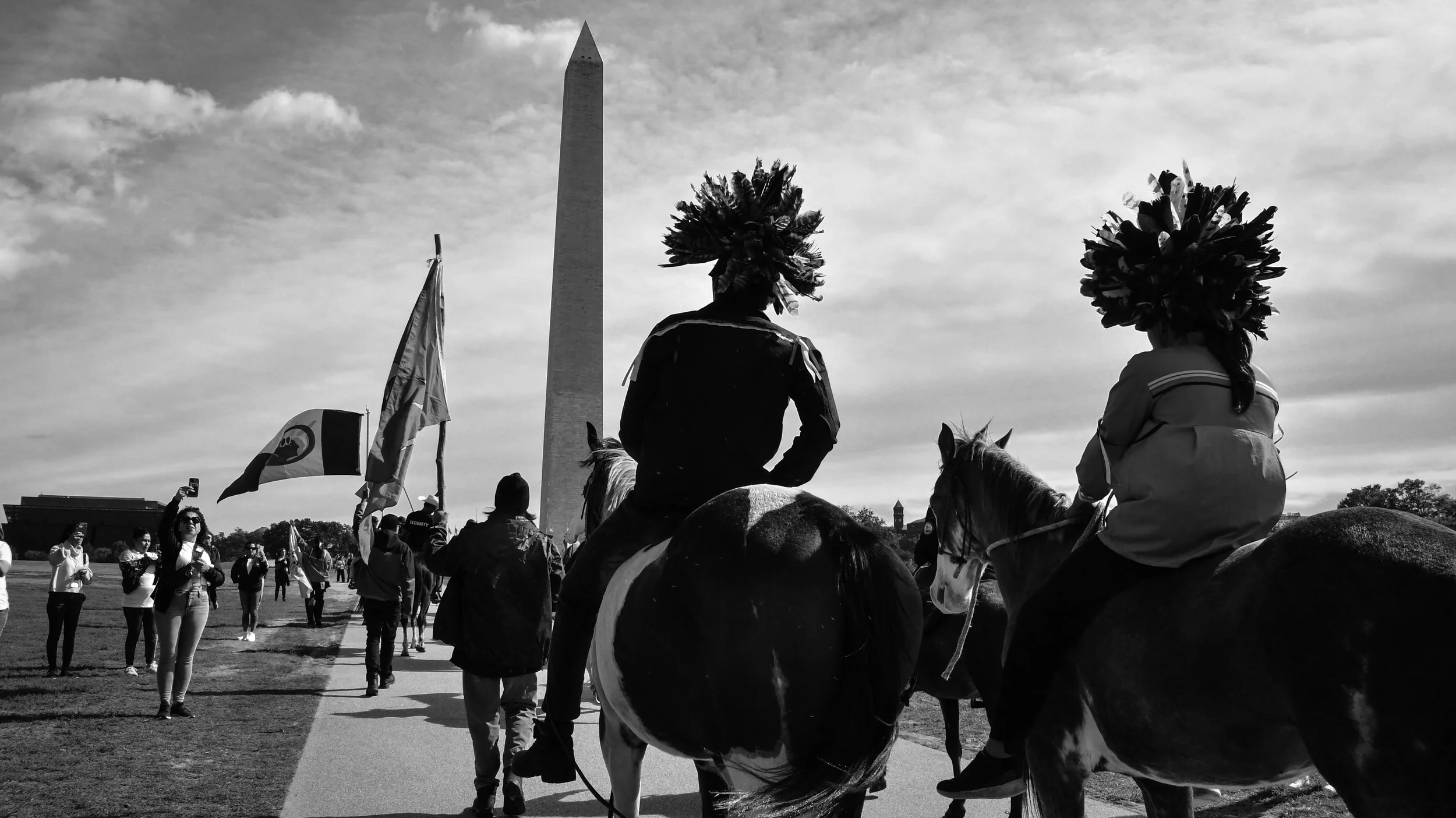
On August 4, 2024, from the shores of San Francisco’s Crissy Field, the Muwekma Ohlone Tribe began the Trail of Truth: a 90-day horseback journey across Turtle Island to Washington, D.C. Led by Chairwoman Charlene Nijmeh and tribal kin, and supported by allied tribes including the Shinnecock and Akwesasne, and by Oglala Lakota kin from Pine Ridge, the journey was a quest for federal recognition and a living ceremony of healing, diplomacy, and presence.
Rooted in over 10,000 years of stewardship over the San Francisco Bay, the Trail confronted the echoes of genocide, displacement, and systemic erasure. In Washington, D.C., peaceful demonstrators faced violence from National Parks Police. The journey affirmed that the Muwekma endure not as relics, but as a living people.
In this Trail, the profound whispers: We are here, unbreakable, eternal.
Closing: a statement from Muwekma Tribal leadership
This concluding statement appears on the current Federal Recognition page. It refers to a wait of “one hundred and three years” since 1906, which would date the statement to about 2009. We recommend keeping the words, and adding a short dated credit, until the Tribe decides whether to update it.
As a result of continuous gross negligence, crass indifference, and deceitful actions by the Department of Interior, the Muwekma Ohlone Tribe is in the final throes of seeking resolution of its federally acknowledged status in federal court, in order to correct the “administrative errors” perpetrated by the BIA in 1927 and in 2002. The Muwekma Tribe has waited since 1906 — one hundred and three years — for some semblance of justice. The Tribe has learned that if one follows the law and regulations, the federal government and its bureaucracies have the power to change all the rules of law midstream. Our people have suffered long enough under this “Apartheid system” of government, and from the inequities perpetrated on us as the documented Aboriginal Tribe of the San Francisco Bay Area.
Our people are refugees within their aboriginal homeland. We will not stop fighting for our rights or for the rights of the other legitimate historic Tribes in California and elsewhere in the United States. We have suffered enough indignity by being totally disenfranchised. Regardless of the federal government’s recalcitrance to restore our Tribe’s status as a federally recognized tribe, we will nonetheless persevere as the Aboriginal Tribe of the San Francisco Bay Region.
The Muwekma Ohlone Tribe anticipates a positive outcome as a result of our multi-year lawsuit against the Department of Interior/BIA. We anticipate that our Tribe will be restored to the list of federally recognized tribes, and when that joyful moment happens, we intend to celebrate our freedom from the odious yoke of oppression and exclusion that has been perpetrated upon our People since the invasion of California by European colonial powers and American expansionist policies.
Please join with us in the everyday celebration of life, and embrace the acknowledgement that our ancestral homeland is indeed a wonderful place to live, for all of us and our children. Aho!
We have lived here in our ancestral homelands within the greater San Francisco Bay for over 10,000 years and we have no intention of leaving, giving up or abdicating our Indian Heritage and Sovereign Rights!